Stylopauropus pedunculatus Lubbock, 1867

ID Difficulty

Identification

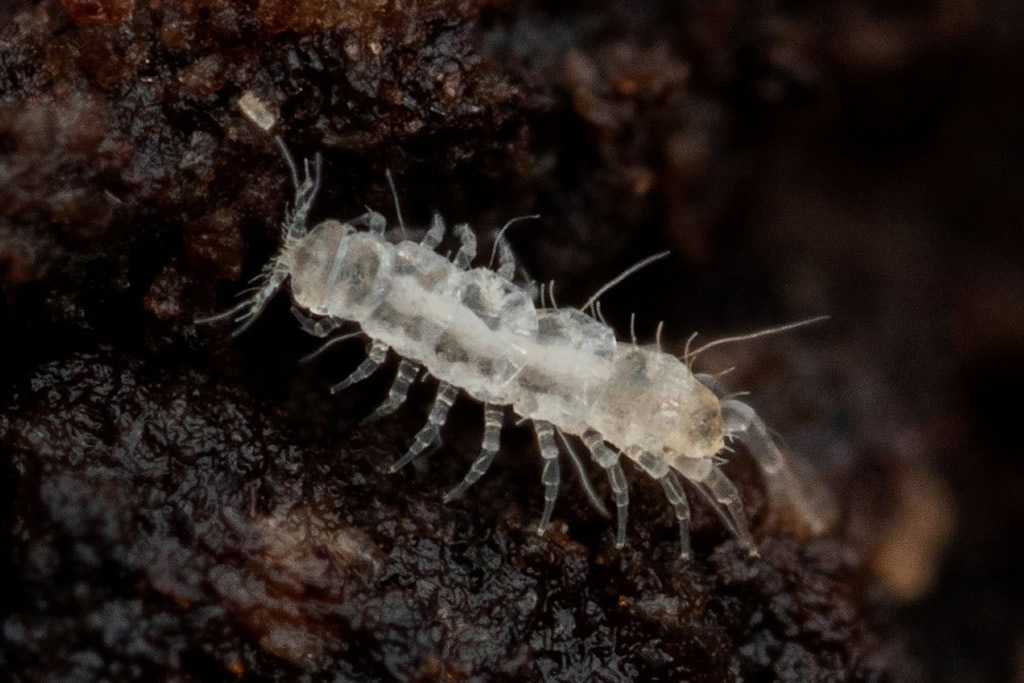
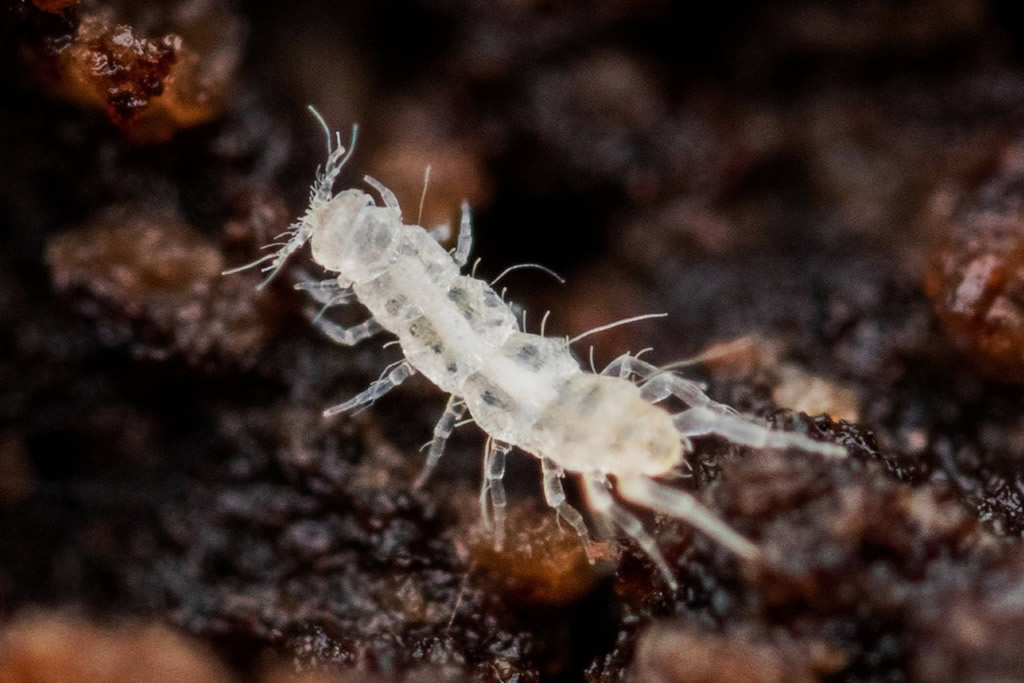
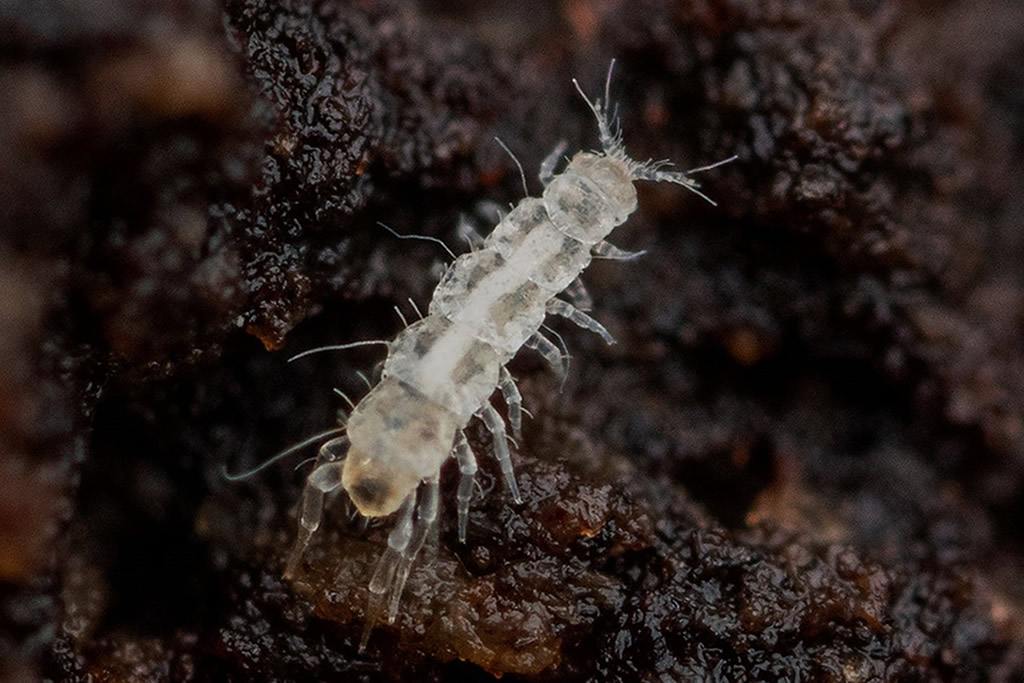
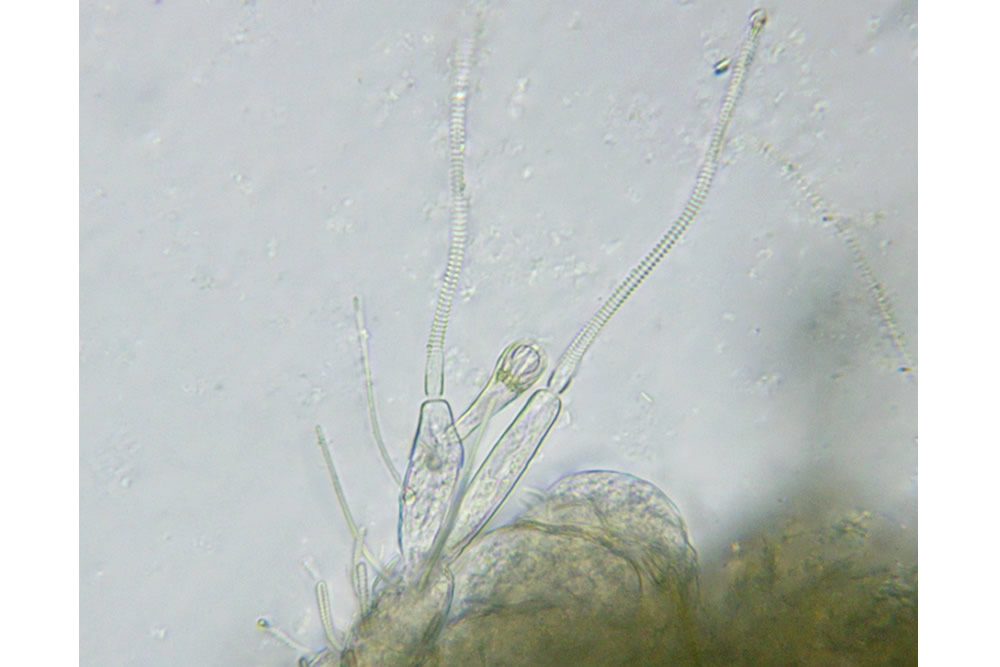
One of the largest UK species, up to 2mm in length and much thicker in shape than members of the Allopauropus genus, adults being characteristically thickest at the 5th tergite. Species in the genus Stylopauropus can be identified by the globulus being situated on a stalk that is approximately twice as long as the diameter of the globulus. 

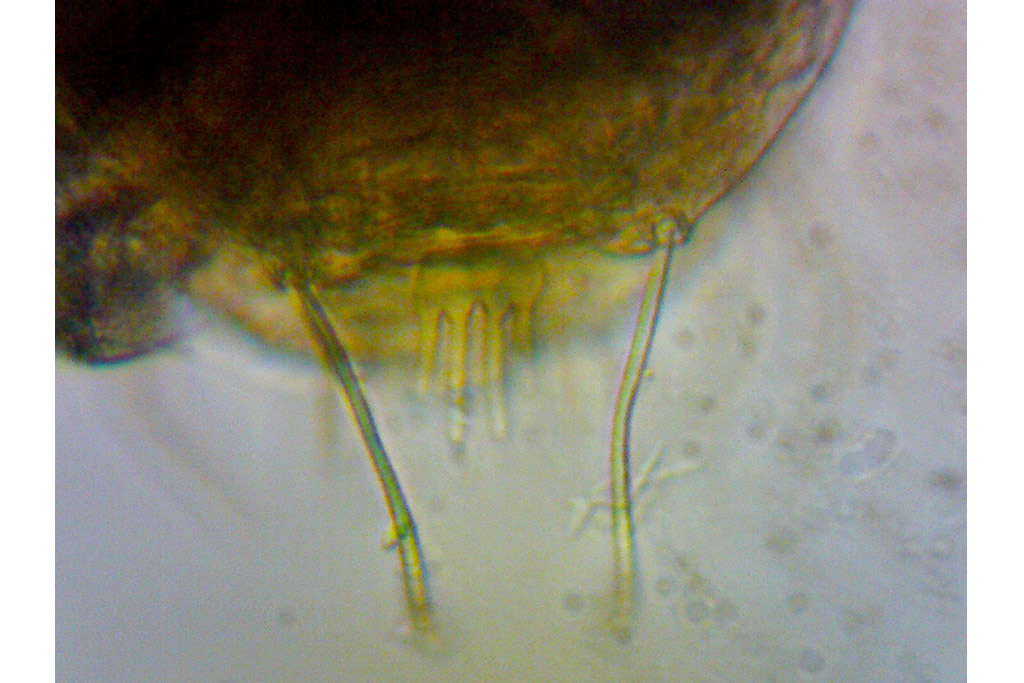
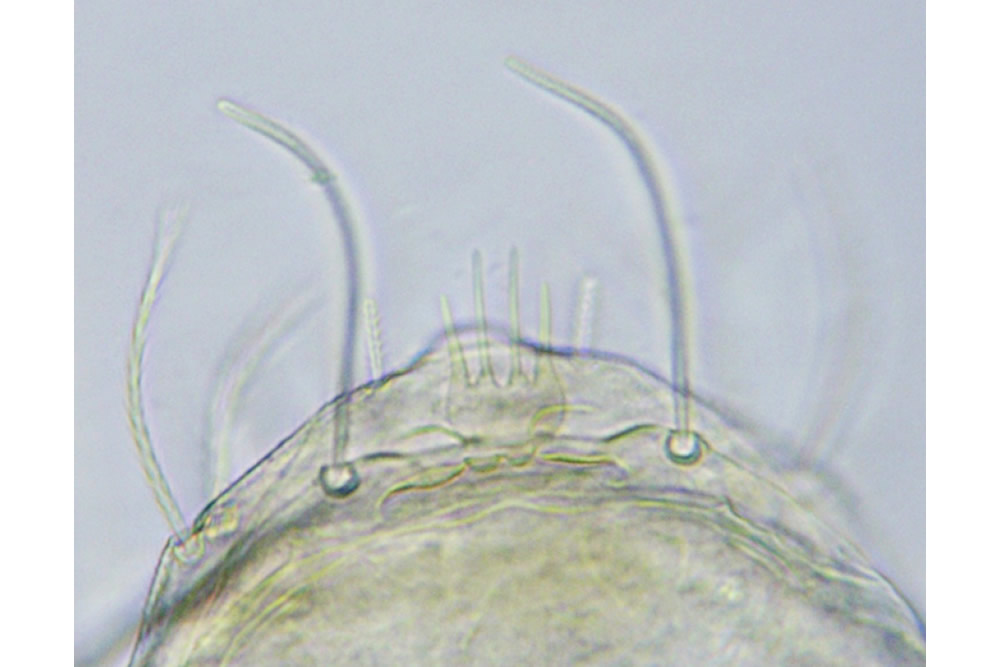
Although a subspecies and many varieties exist of this species in Europe, the UK variety has a fork-shaped anal plate with the outer appendages being approximately three quarters the length of the inner appendages (although they can appear almost equal in length or half the length depending on the viewing angle). The styli are stick-like and hairy, similar in length to the central appendages of the anal plate. These structures are only clear at >800x magnification.

Text compiled by Dawid Martyniuk.
Stewart Bevan & Christian Owen
Christian Owen
Dawid Martyniuk
Dawid Martyniuk

Stylopauropus pedunculatus is a common species, observed in most of Europe, North America, and North Africa.

This species can be found in many habitats typical of Pauropods but seems to most frequently occur in wet rotting wood and under bark. In humid and cool weather, Stylopauropus pedunculatus can be found <1cm below the surface of wood but retreat deeper into the wood or soil in drier conditions. 

They are typically found all-year round in groups but may also be observed with other species. 

Text compiled by Dawid Martyniuk.
References

Barber, A.D., Blower, J.G., Scheller, U. (1992). Pauropoda, the smallest myriapods. Bulletin of the British Myriapod Group 8: 13-24.

Chalupsky (1964). Study on the Stylopauropus’ species in Europe. acta societatis zoologicae bohemoslovenicae. 326- 337.

Oliver, P.G. & Amsden, A.F. (1982). The Pauropoda. Nature in Wales 1: 33-38.

Scheller,U. (1990). A list of the British Pauropoda with a description of a new species of Eurypauropodidae (Myriapoda). Journal of Natural  History 24: 1179-1195.

BRC code

132

idBmigTaxa

Pau_137