Status:
Native
ID Difficulty
Identification
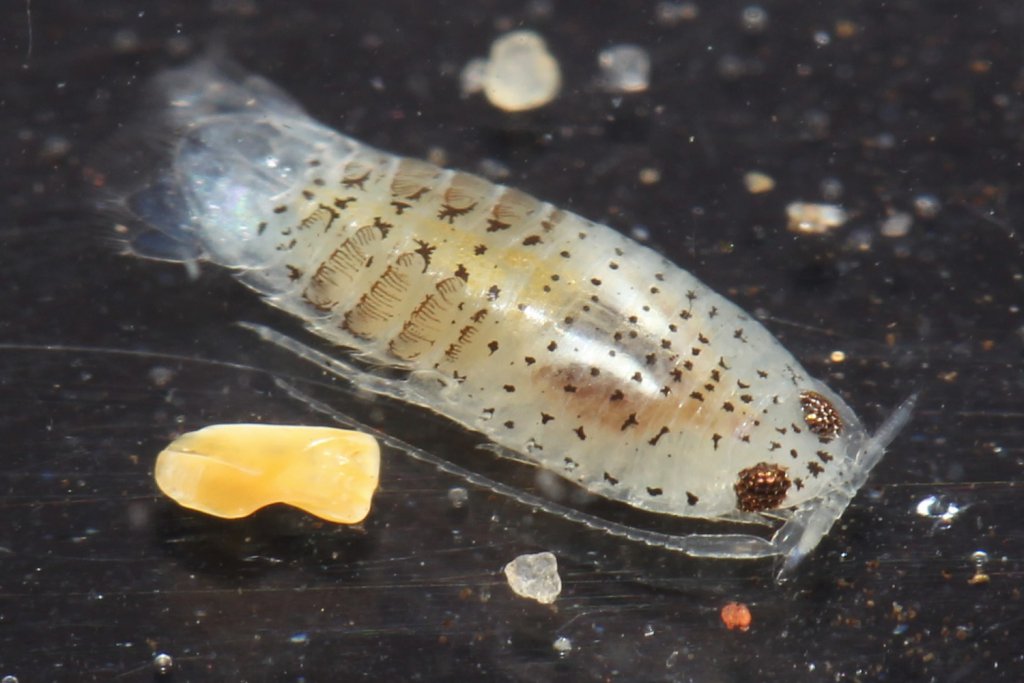
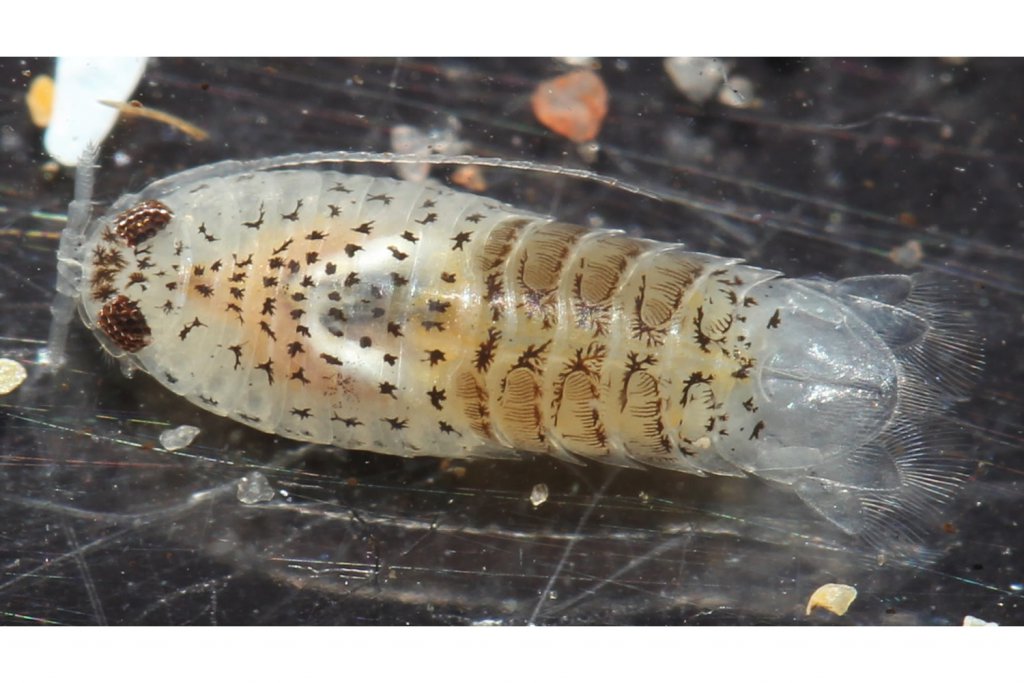
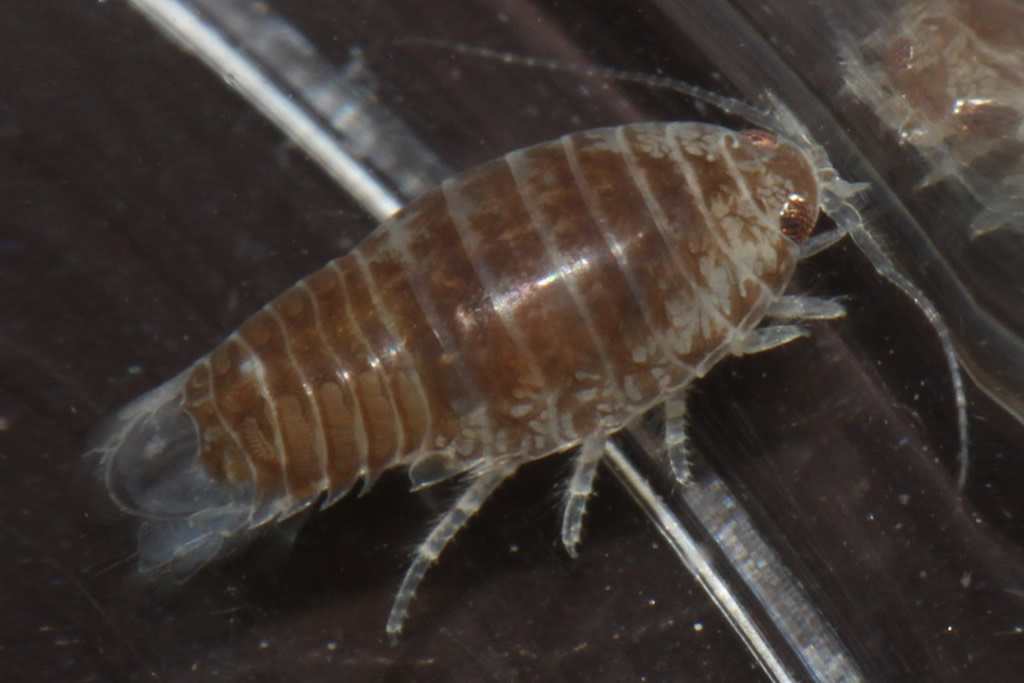
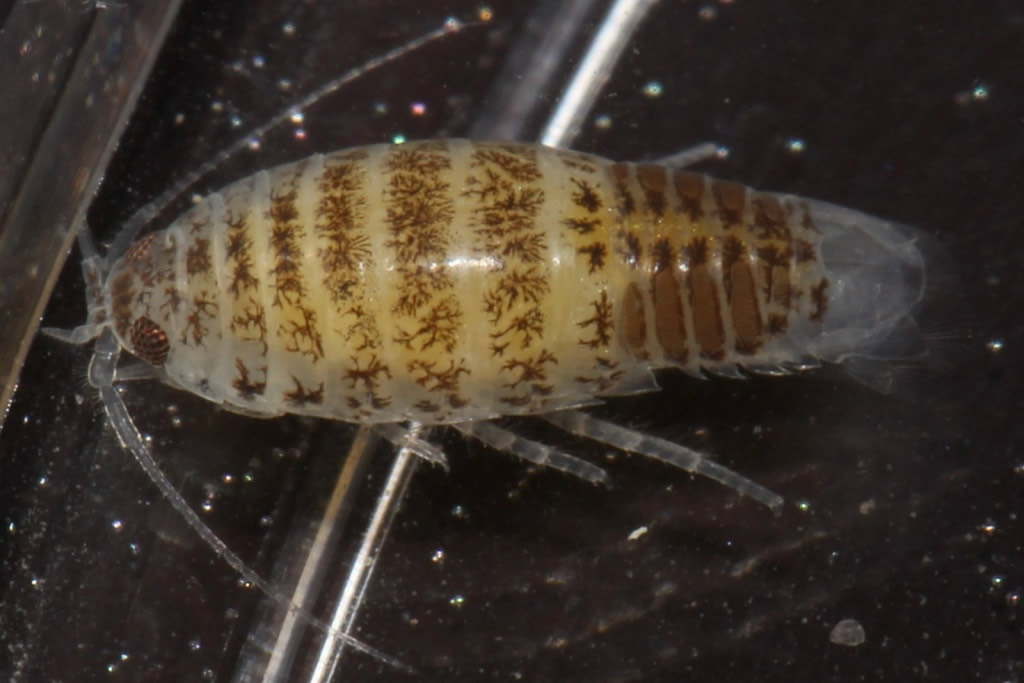
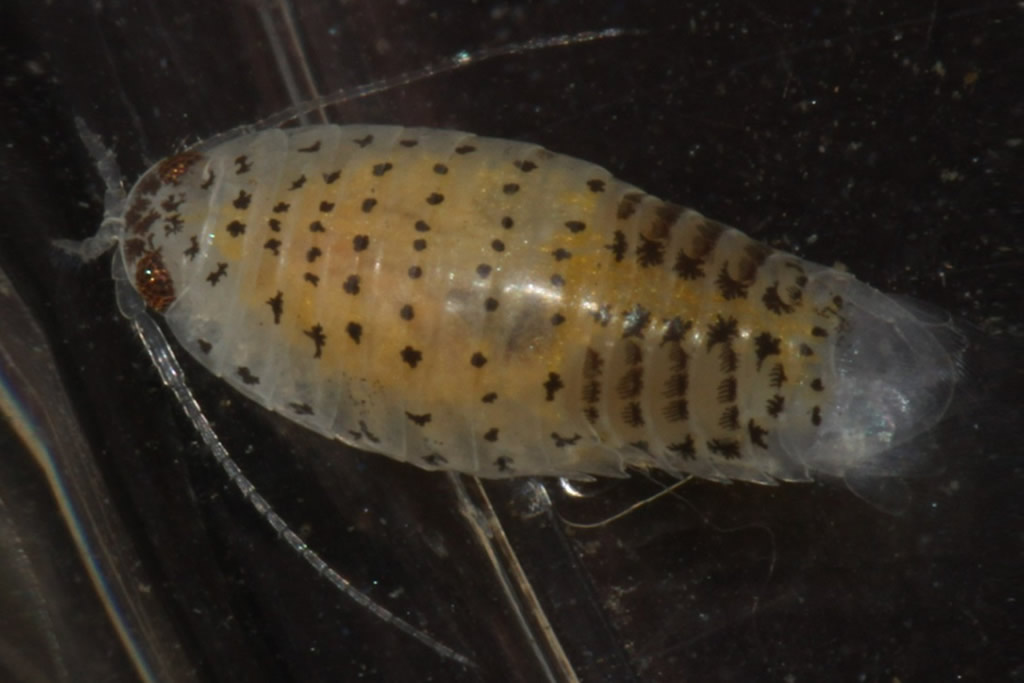
Eurydice are small, fast-swimming predators and scavengers with oval bodies and elongated pleotelsons. The peduncle of the antenna has four segments, whilst the second segment of the antennule is at a right angle to the first. The body is off-white with various darker markings, and the eyes are prominent.
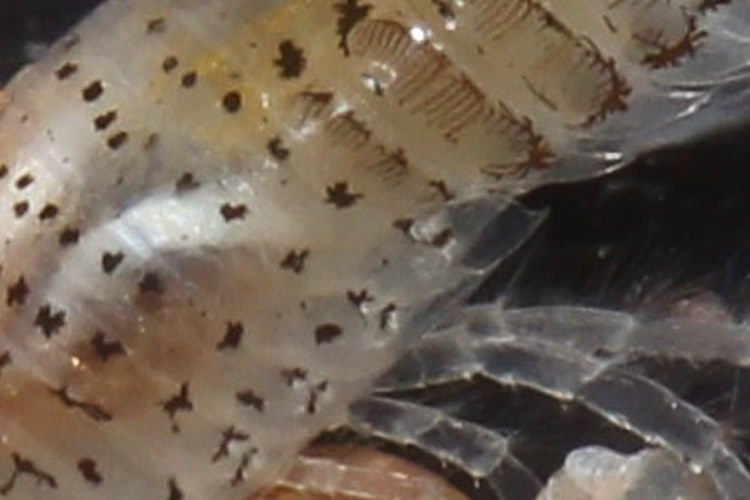
E. pulchra, by far the most common species in the intertidal zone, has a rounded hind margin on the pleotelson with two short spines at each side of it surrounded by longer plumose setae. The coxal plates of somites 6 and 7 have a characteristic shape which should be examined for definite identification; both are fairly pointed, especially that of somite 6. The dark markings cover both the dorsal surface and sides of this species. Males grow up to 8 mm, females to 6.5 mm.
In addition to the two other Eurydice species that are encountered intertidally, fieldworkers should be aware of the three other species that occur in (offshore) British waters, E. inermis, E. truncata and E. grimaldii (see Hansen 1905 and Jones & Naylor 1967 for details), the first two of which can come close to the shore at high tide.