Ant that preys on Bristly Millipedes!

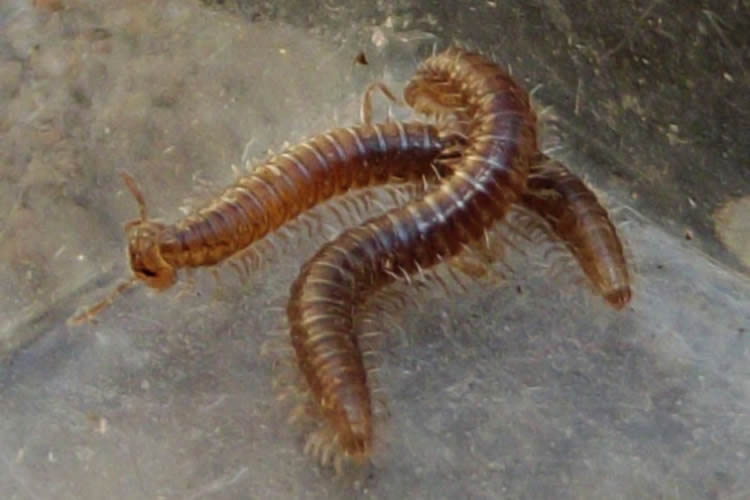
In this week's New Scientist, an interesting interview with entomologist E.O.Wilson. The last section will be of interest to those who ever wondered what could possibly eat a polyxenid Bristly Millipede.

Read a scan of the text here.

--------------------------------------------------------------------------------------------------------------------------------------------------------

Announcement type

The first genome of a myriapod has been sequenced

The first genome of a myriapod, the geophilomorph centipede  Strigamia maritama, has been sequenced. 

Arthropods are the most species-rich group of animals on Earth. Of the four main arthropod groups alive today, insects, crustaceans, chelicerates and myriapods, it is the latter (which includes centipedes and millipedes) for which the genome had not been sequenced. 

Announcement type

--------------------

BMIG Newsletter 29 (Autumn 2014)

Contents: Editorial; The Ecclesiastical Millipede Polyxenus; Gap Fillers – Woodlouse Recording Scheme; Further myriapods from an isolated island; The Spiky Yellow Woodlouse Pseudolaureola atlantica; Iridovirus in North Dulwich; Chordeuma proximum in Suffolk; More swarming millipedes; In the journals; CIM.

Weight
-29
Resource type

An introduction to Woodlice, Millipedes & Centipedes

By Steve Gregory at Dinton Pastures, Reading (BENHS)

A one day free introductory workshop to the identification of woodlice, millipedes and centipedes. Following a presentation on the characters used to identify these groups, participants will have the chance to name their own material or specimens made available on the day from the BMIG reference collection which is housed at Dinton Pastures.

For further details, including directions, see http://www.benhs.org.uk/site/?q=node/17


Announcement type

An introduction to Woodlice, Millipedes & Centipedes

Steve Gregory (Dinton Pastures, Reading - BENHS)

A free introductory workshop to the identification of woodlice, millipedes and centipedes. After a presentation on the characters used to identify these groups, participants will have the chance to name their own material or specimens made available on the day from the BMIG reference collection housed at Dinton Pastures.

For full details will be made available in due course: http://www.benhs.org.uk/site/?q=node/17


Announcement type