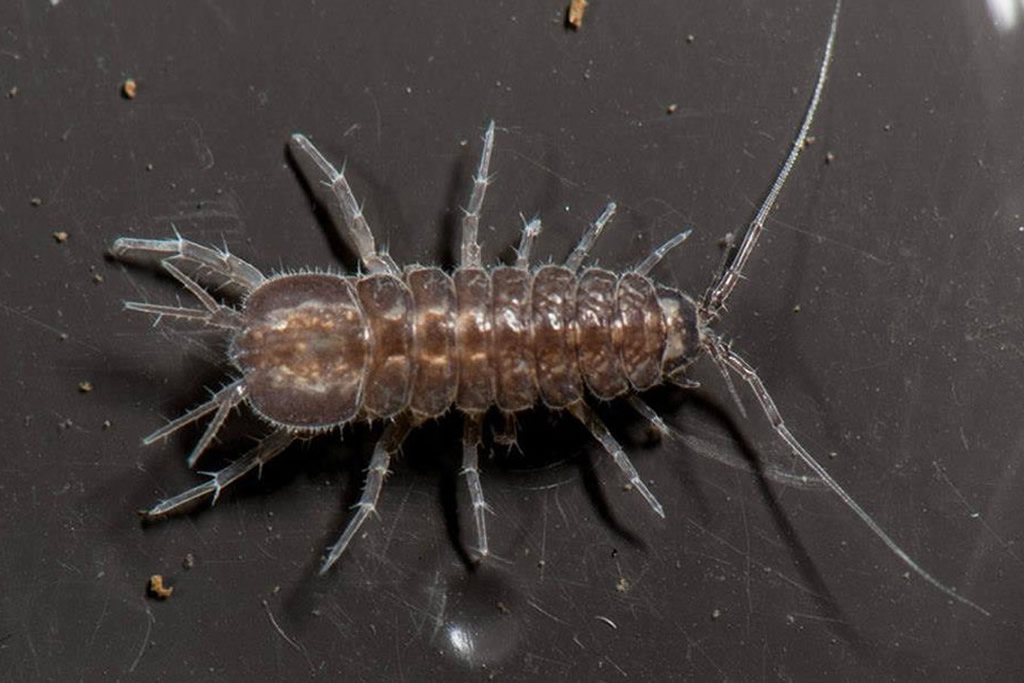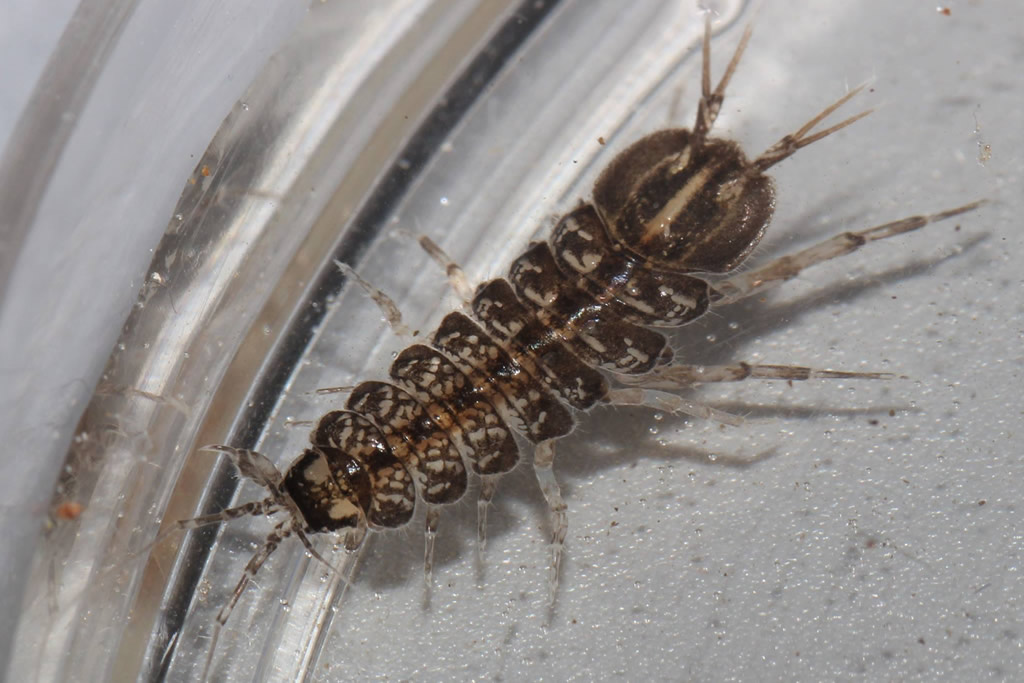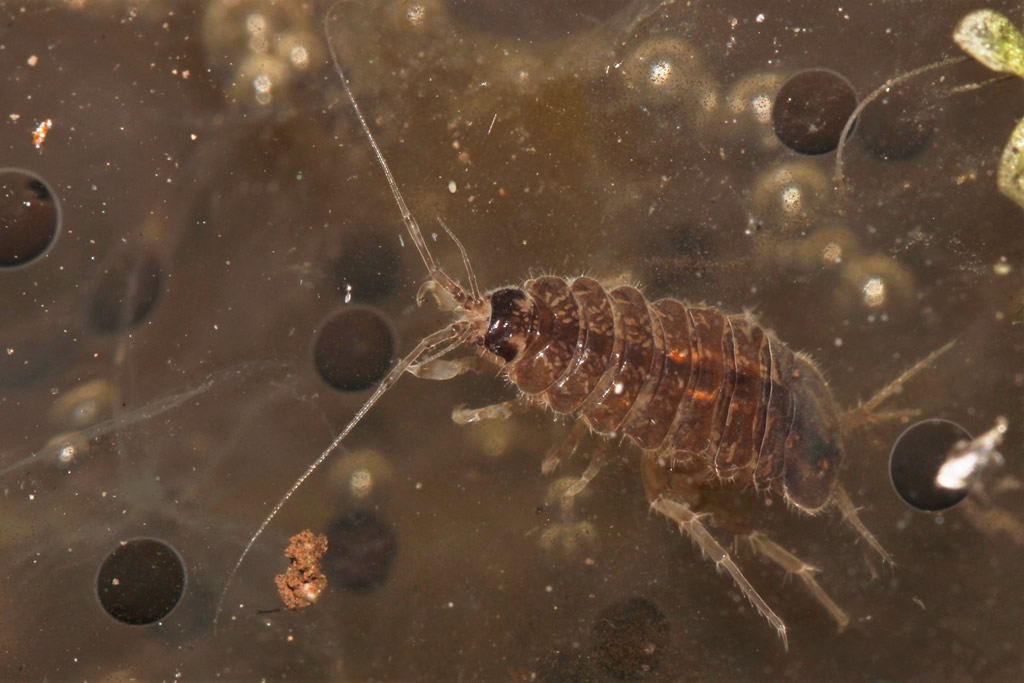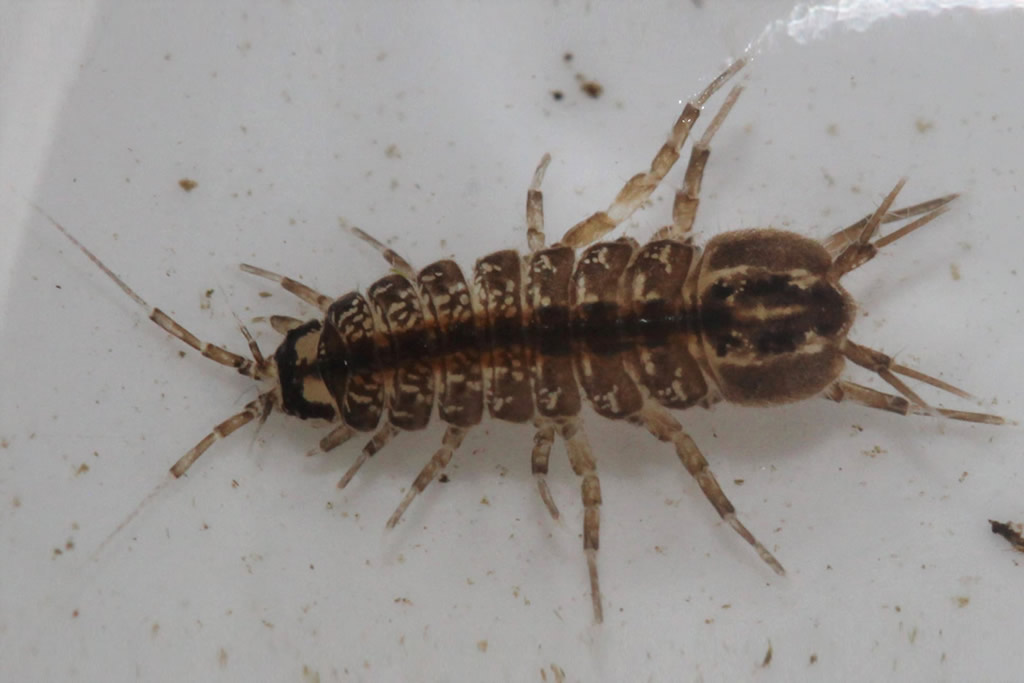
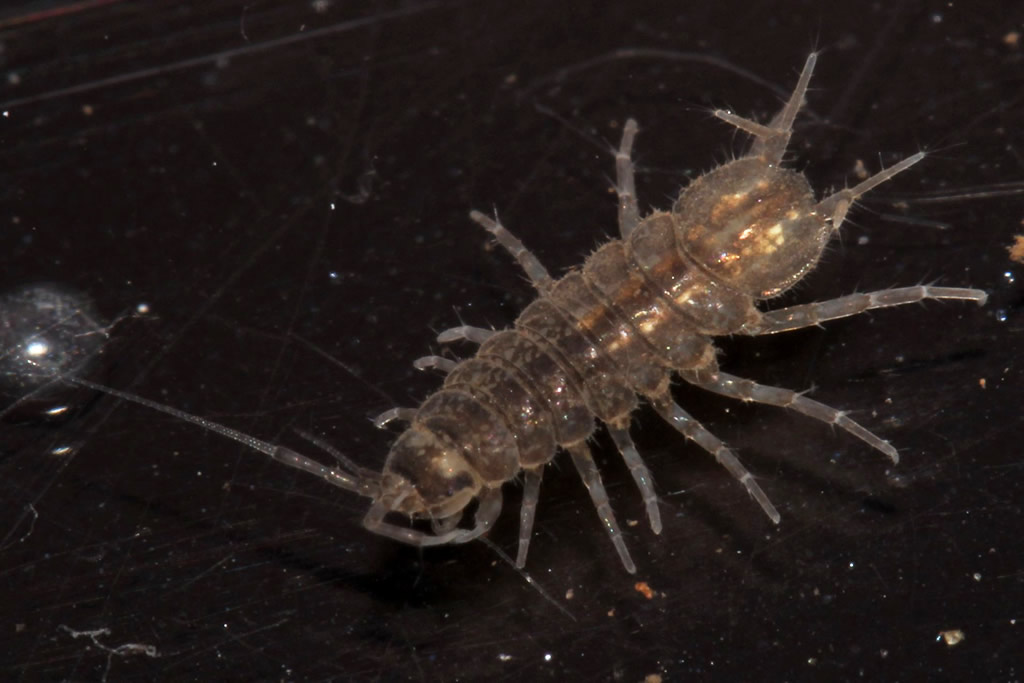
Asellus aquaticus (Linnaeus, 1758)
Common name
Status:
GB IUCN status: Least Concern
ID Difficulty
Identification
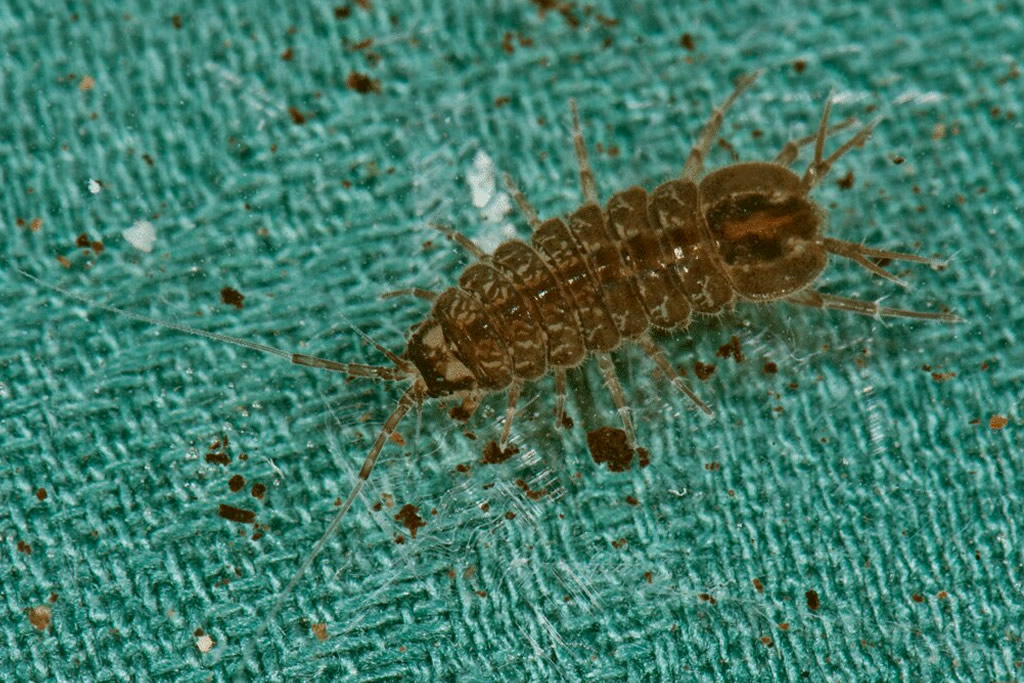
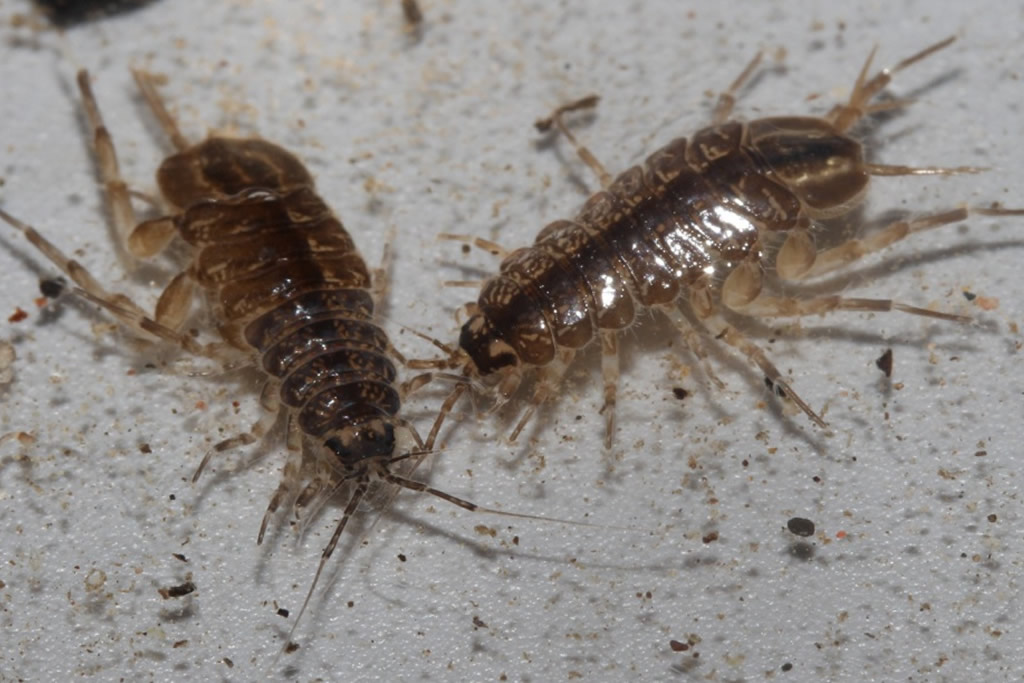
Waterlice (Asellidae) are distinguished from the terrestrial woodlice by their plate-like pleotelson, consisting of four pleonites and the telson fused together.
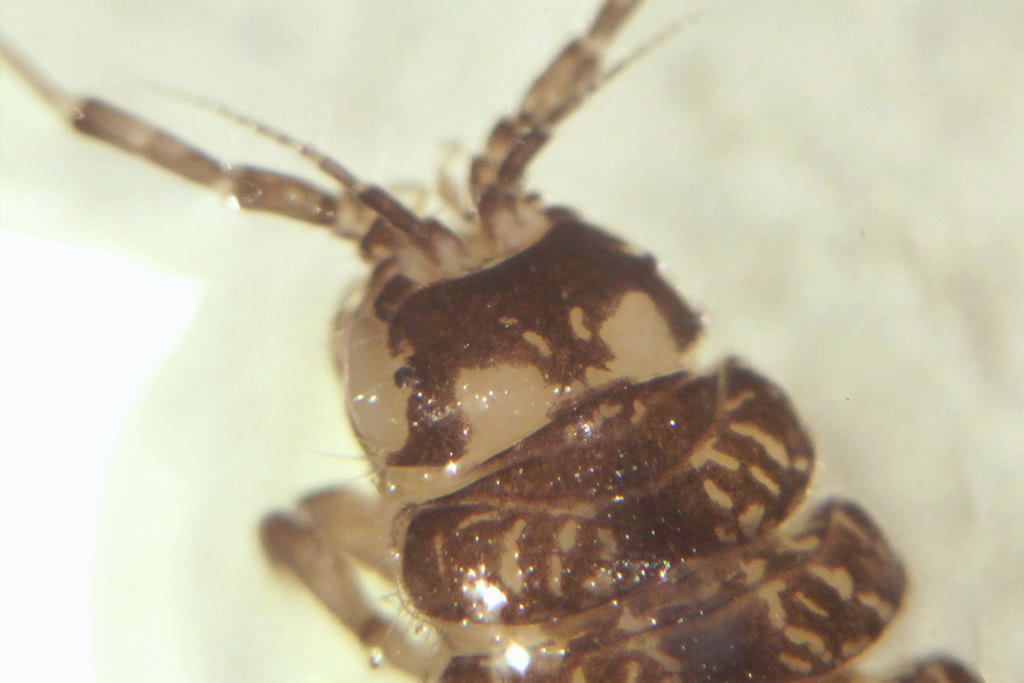
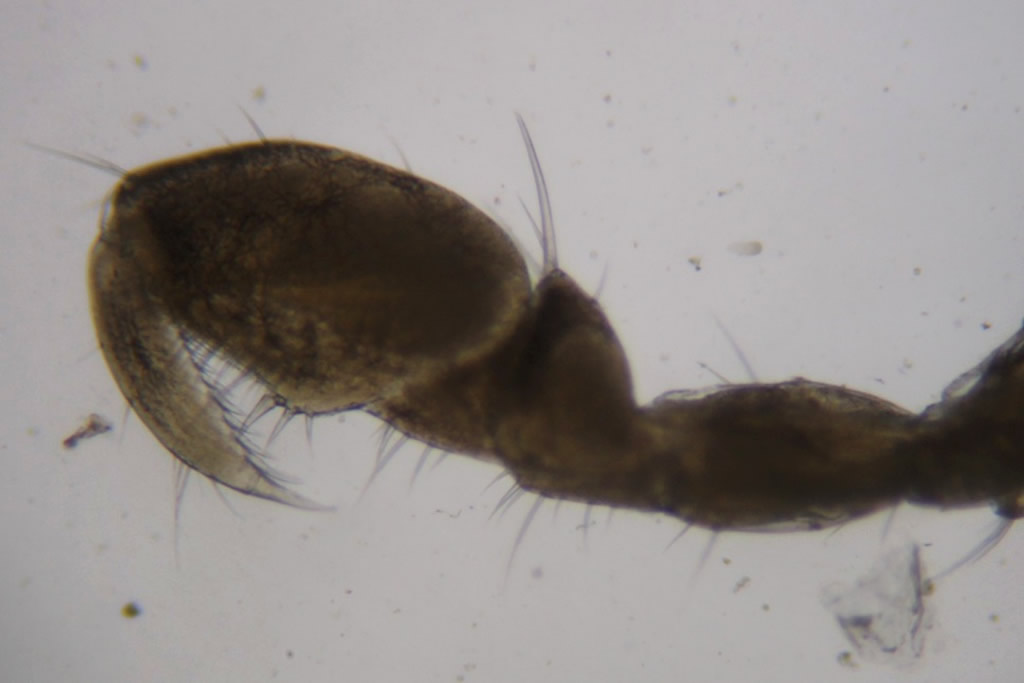
Asellus aquaticus can usually be distinguished from the frequent Proasellus meridianus by the pattern of pigmentation of the head, with two pale spots at the back separated by a central dark pigmented area. However, head pigmentation can vary and the two species are frequently confused. The situation is further complicated by the recent discovery of the introduced Proasellus coxalis in England. The shape of the male first pereopod (leg) is diagnostic.
Distribution
Asellus aquaticus is abundant throughout Britain (but under-recorded in Wales and Scotland) and probably across Ireland (where is seems to be badly under-recorded).
Habitat
It occurs in a wide variety of water-bodies, including small urban garden ponds, ditches, lakes, canals and rivers.
Specimens can be found among water plants, under stones and submerged bits of dead wood, among the roots of riparian trees and on the stonework of bridges. It is tolerant of organically polluted waters, high salinities, low pH and high metal concentrations.
This summary is based on the detailed account in Gregory (2009).
References
Gregory, S. (2009) Woodlice and Waterlice (Isopoda: Oniscidea & Asellota) in Britain and Ireland. Field Studies Council/Centre for Ecology & Hydrology.
Links
World List of Marine, Freshwater and Terrestrial Isopod Crustaceans: https://www.marinespecies.org/isopoda/aphia.php?p=taxdetails&id=264152